Real Ale Club’s Llandudno outing
Dark Lies the IslandReal Ale Club’s Llandudno outing begins as a hot July excursion in search of good beer and becomes both a small rebellion over how beer should be judged and a quietly painful episode in Mo’s life. The day’s convivial rituals—scoring ales, linking arms, and sharing a joke on the train—frame an encounter with Barbara that lifts Mo into hope before the realities of her marriage send him away visibly wounded.
The outing and the scoring dispute
The club travels from Lime Street on a Saturday in punishing heat, its members reduced to T-shirts as they set out for the Llandudno pubs they have been told are worth visiting. The narrator is taking on two jobs in the club, publications and outings, a combination already described as controversial. The party’s journey and shared purpose establish the outing as more than a series of tastings: the members are a close-knit group, with a club culture of its own.
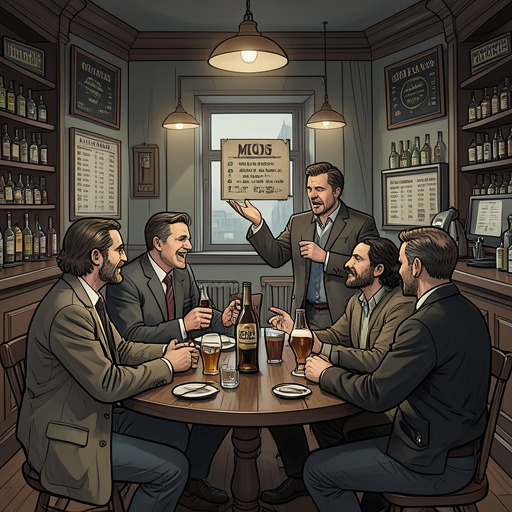
That culture comes into focus when John Mosely calls for a decision about the National Beer Scoring System. The established system rates beer from zero to five: zero means a beer is fit to be returned, while a five is an exceptionally rare distinction, reserved for only a handful of beers across a seasoned drinker’s lifetime. The Merseyside branch has long considered those grades too broad. Its members instead adopted a zero-to-ten scale at a night in Rigby’s, believing finer gradations could capture differences in a beer’s character, from a hoppy note to the mellow effect of oak casking. Billy Stroud had argued for decimal scores such as 7.5 and 8.5, but the club drew the line at whole numbers.
The national organisation has responded stiffly to the branch’s continued use of its own scale, and there is talk of losing the charter. The dispute therefore concerns both taste and authority: the members are deciding whether to preserve a local standard they believe to be more discerning, despite the risk of institutional censure. Everett says the club knows its system is better. John Mosely’s agreement settles the question, and the narrator joins the decision to score from zero to ten. Six men link arms on the hot pavement before turning onto the promenade and heading for the Heron Inn, carrying their collective resolve into the day’s next stop.
Mo and Barbara at the bar
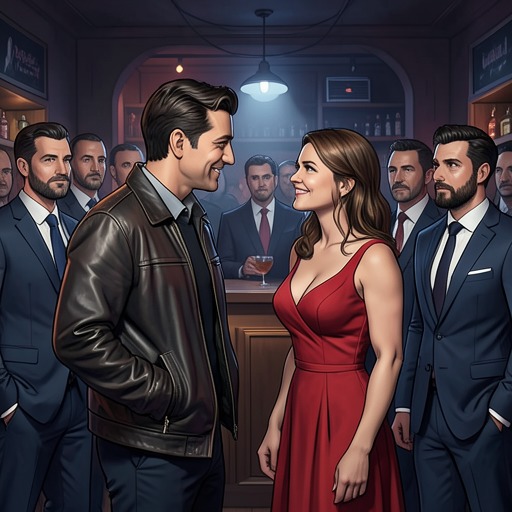
At one of the pubs, the landlady looks towards the group, counts six, and drops a glass. It smashes on the floor as she says, “Maurice?” Mo freezes; then his stare softens, and he answers, “B-B-Barbara?” The encounter changes the atmosphere of the outing. The others watch Mo rise and cross to the bar, where he and Barbara take each other’s hands over the counter and remain wordless for a time. Once they notice the group watching, they giggle. Barbara blushes as she pours the Lancasters, spilling beer into the slops gully, then joins Mo in an absorbed huddle at the far end of the counter.
The club’s first impression is that this reunion has revealed a romantic side of Mo they would not have expected. But the moment is constrained by Barbara’s present circumstances. The landlord greets Mo with polite handshakes and feigned interest, then slips a hand around the small of his wife’s back. John Mosely sternly calls that it is time for the group to finish their drinks. Mo has one last whispered exchange with Barbara; her smile is now fixed, and the landlord remains close beside her. As the party leaves, Mo looks back and calls her name, his voice a note too loud. The brief intimacy gives way to a painful departure without any resolution between them.
The journey home
Later, Mo arrives at the Ox with terrible scratch marks down his left cheek. He is wordless, staring into the ale placed before him, while the others discreetly signal and decide to return to familiar ground rather than continue on to Henderson’s. The outing has turned from a shared celebration into a day the group must navigate around Mo’s hurt. The scratches are visible evidence of his changed condition, though the account does not explain how he got them.
The group climbs the hot streets towards the station and buys Cumberland Pedigrees, a 3.4 per cent beer that the narrator describes as an easeful drink. On the crowded train, among returning day-trippers, the men sip quietly. Mo slumps as if half dead, but now and then he raises himself for a mouthful. Asked how the beer tastes, he answers, “Like a ten,” and the group laughs. The joke returns the scoring system to the centre of the scene, but in a different register: the scale that earlier expressed the branch’s seriousness now gives Mo a way back into its shared humour. The narrator is reassured by the flicker of his old wit, even as the silence and slumped posture make clear that the reunion with Barbara has not ended happily.
Significance
The outing’s two central developments turn on competing kinds of judgment. The members argue that beer deserves more nuanced evaluation than the national scale allows; Mo, meanwhile, experiences the difference between a hopeful reunion and a relationship still bounded by Barbara’s marriage. The club can make its preference official through a collective decision, but Mo cannot turn a moment of mutual recognition into a lasting change in Barbara’s circumstances.
The repeated language of scoring draws the strands together without erasing that difference. The zero-to-ten system marks the group’s independence and shared identity; Mo’s “Like a ten” makes that same idiom an affectionate response to the men who have accompanied him home. His humour restores a small measure of companionship, not the romantic possibility glimpsed at the bar. The day thus ends with the club intact around him, while its most intimate encounter remains unresolved.